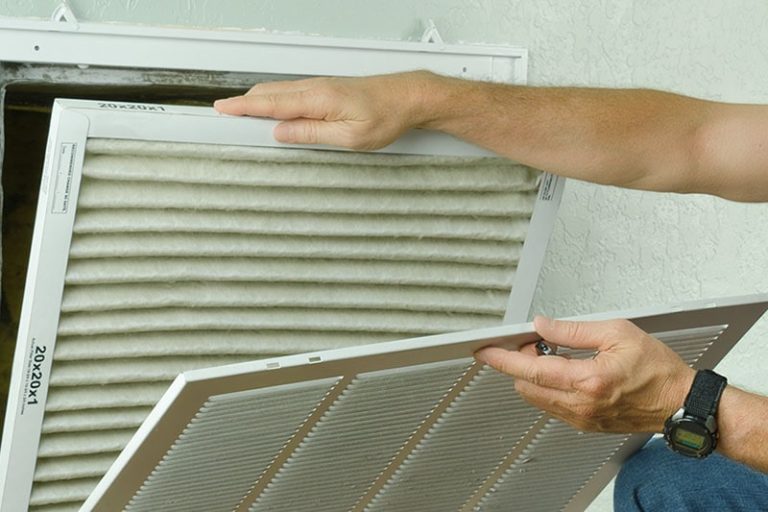
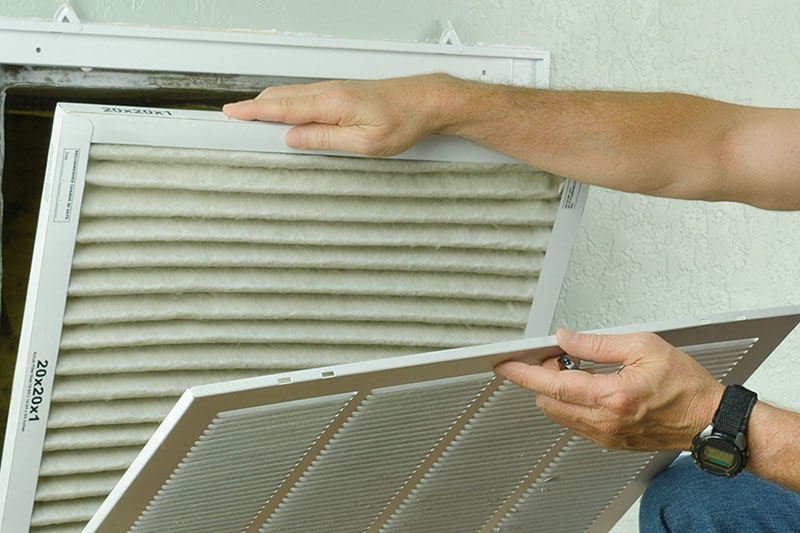
Choosing the right air filter for your home goes beyond picking up the first one you see at the store. Air quality significantly impacts your household’s health and comfort, and one of the best ways to maintain clean indoor air is by using an effective air filter.
MERV ratings (Minimum Efficiency Reporting Values) help you understand the filtering capabilities of different air filters so you can select the one best suited to your home’s needs.
This guide from the heating and cooling experts at Gillette Services – Plumbing, Heating & Air will break down what MERV ratings mean, how they work, and how to choose the right filter for your household based on your unique needs.
What Are MERV Ratings?
MERV ratings were developed by the American Society of Heating, Refrigerating, and Air-Conditioning Engineers (ASHRAE) to measure an air filter’s efficiency.
They provide a standardized scale that ranges from 1 to 20, with each number indicating the filter’s ability to capture specific particles. A higher MERV rating means the filter is more effective at trapping smaller particles, while a lower rating suggests less filtering power, allowing more particles to pass through.
Understanding the MERV rating scale will help you choose a filter that provides an ideal balance between air cleanliness and system compatibility.
Some filters can restrict airflow if they’re too dense for your HVAC system. So don’t choose an air filter merely on MERV rating alone; also check the manufacturer’s manual for your heating and cooling system to find out the highest MERV rating it is compatible with.
MERV Ratings by Range and What They Filter Out
Understanding MERV ratings can help you select the best air filter for your HVAC system and your preferred indoor air quality needs. This section breaks down MERV ratings by range to explain what particles each filter can trap, from common allergens to microscopic pollutants.
MERV 1-4
Filters with MERV ratings from 1 to 4 catch larger particles but allow smaller particles to pass through. These filters work well in basic residential environments with no special air quality concerns.
They provide minimal filtration, mainly capturing pollen, dust mites, and carpet fibers. If you don’t have pets, allergies, or respiratory sensitivities, a MERV 1 to 4 filter may suffice for basic dust control.
Best For: Basic residential use with minimal filtration needs.
Particles Filtered: Pollen, dust mites, and other large particles (10 microns or larger).
MERV 5-8
This range is suitable for homes looking for enhanced air quality. Filters rated MERV 5 to 8 capture more particles, including common allergens like pet dander and mold spores.
These filters are ideal for households with pets or residents who may suffer from mild allergies. They also provide a good balance between filtration and airflow for most HVAC systems, effectively capturing particles that might otherwise circulate throughout your home.
Best For: Most standard residential settings, especially if you have pets.
Particles Filtered: Mold spores, pet dander, dust mite debris, and other particles between 3 to 10 microns.
MERV 9-12
Filters with MERV ratings from 9 to 12 offer excellent filtration, capturing smaller particles that could be harmful if inhaled. These filters are a smart choice for households with allergy sufferers or people with respiratory conditions, as they can trap smaller allergens that lower-rated filters may miss.
Best For: Homes with allergy sufferers or individuals with respiratory concerns.
Particles Filtered: Fine particles between 1 and 3 microns, including auto emissions, lead dust, and some bacteria.
MERV 13-16
Filters in this range are highly efficient, capturing a significant portion of even the smallest particles. They are typically used in hospitals, labs, and other environments where air quality is critical.
If your household includes individuals with asthma or serious respiratory issues, a MERV 13 to 16 filter can offer added protection by capturing bacteria and even some virus-sized particles.
However, these filters may restrict airflow in certain residential HVAC systems, so consult a professional before installing them in a standard home HVAC unit.
Best For: Homes with serious allergy sufferers, respiratory issues, or medical conditions.
Particles Filtered: Very fine particles like bacteria, tobacco smoke, and sneeze particles, ranging from 0.3 to 1 micron.
MERV 17-20
The highest-rated MERV filters, MERV 17 to 20, are designed for use in clean rooms and environments that require sterile air, such as certain medical and industrial settings. These filters are so dense that they would obstruct airflow in nearly all residential HVAC systems.
Best For: Specialized commercial environments (not recommended for residential use).
Particles Filtered: Virtually all particles, including viruses and carbon dust (0.1 microns or smaller).
How to Choose the Right MERV Rating for Your Home
Selecting the right MERV rating involves balancing filtration needs with your HVAC system’s capabilities. Here are a few factors to consider:
- Allergy and Asthma Concerns: If anyone in your household suffers from allergies or asthma, a higher MERV rating (9 to 12) can significantly improve indoor air quality by filtering out allergens like pet dander, pollen, and mold spores. You might consider MERV 13 to 16 for severe allergies or respiratory conditions, but always consult your HVAC technician to ensure your system can handle it.
- Pets in the Household: Homes with pets may benefit from a MERV 5 to 8 filter to help manage pet dander. If you have multiple pets or a pet with longer fur, you may want to go up to MERV 9 to 12 for better dander and fur control.
- Dust and Air Quality: For those who live in areas with high levels of outdoor pollution or dust, such as near highways or construction zones, a MERV 9 to 12 filter could be beneficial. These filters help block outdoor contaminants, providing additional protection for your home.
- HVAC System Capacity: Not all HVAC systems are compatible with high MERV-rated filters, as dense filters can restrict airflow and place strain on your system. A filter with a high MERV rating may improve air quality but can damage your system if it’s not designed for it. Always consult your HVAC manual or talk to a professional before choosing a MERV rating above 12.
How Often to Change HVAC Air Filter
Regular replacement based on MERV rating helps keep your HVAC system running smoothly and improves indoor air quality. The frequency of replacing HVAC air filters depends largely on their MERV rating, which indicates the filter’s ability to capture particles.
- Lower MERV-rated filters, typically between 1 and 4, capture larger particles and generally need replacement every one to three months.
- Filters with a MERV rating of 5 to 8 are more efficient and capture smaller particles. They are best changed every two to three months.
- Higher-rated filters, with MERV ratings of 9 to 12, provide finer filtration but can restrict airflow, so it is recommended that they be changed every one to two months to maintain efficiency.
- Filters rated MERV 13 to 16, often used in commercial or medical settings, capture very fine particles and should be replaced monthly to prevent clogging and maintain airflow.
Ideally, inspect your filters monthly; if they are dirty, change them. If not, reinstall them and check back next month. As time passes, you’ll be better able to gauge how often your MERV-rated filter needs to be changed—whether every month or every third month.
Shop Our Online Filter Store
The right MERV rating can make a meaningful difference in your indoor air quality, comfort, and health.
By understanding MERV ratings and selecting the appropriate air filter, you can improve your home’s air quality while safeguarding the efficiency of your HVAC system. Regular filter changes and a routine HVAC inspection are also key steps in maintaining a healthy, clean, and comfortable home.
Shop our online filter store and schedule routine deliveries to ensure you stay on top of your filter changes. You can also contact the HVAC team at Gillette Services – Plumbing, Heating & Air by calling (801) 465-7760 or requesting service online if you have any questions or need a system tune-up.